
Finally, we were able to take a trip out of Nice.
Rural France always beckons, and I had had a hankering to see the Lascaux caves since middle school geography class so off we went to the Dordogne River valley, otherwise known as the Perigord Noir.

The crowds were thin this time of year, because Covid restrictions have kept away the large number of British second-home owners in this area. We didn’t hear one single British accent, and normally there would be plenty.
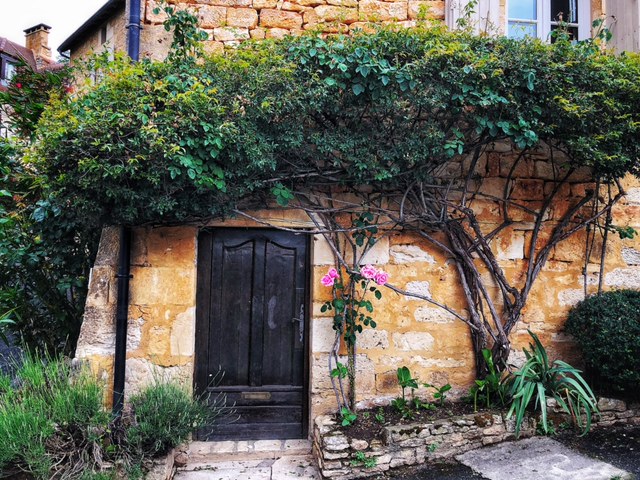
But the Perigord Noir is touristy for good reasons. It is ravishingly beautiful, the river cutting through limestone escarpments pockmarked with caves and topped with medieval villages that endured endless battle during The Hundred Years War (basically an English-French war of succession). Vines of roses crawl over stone houses everywhere, poppies fill the fields in early June, chateaux welcome visitors to their formal gardens, and you never want to go indoors.
It is also famous for its prehistory: many caves are full of carvings, drawings and paintings made around 20,000 years ago. We visited the Lascaux Cave replica, well worth the time. Yes, I’d like to see one of the originals, and there are some lesser decorated caves you can actually enter, but there is much to learn and be awed by even at this duplicate. Lascaux was vast and grand. It was a major work of art and accomplishment for its time, like the Parthenon or cathedrals later on. I was particularly taken by a painting of a cow, which to my eye could have been contemporary. Their maker would probably have a lot to talk about with painters working today. How I’d love to go back in time and meet them.
People then didn’t live in caves, as there was a bit of an Ice Age going on and below ground was just too cold, but they used them for ceremonies. One theory is that the paintings were intended to come “alive” with flickering lights, and in fact remains of oil lamps have been found. Check out @DilettanteryPod on Twitter for an interesting thread on this very topic.
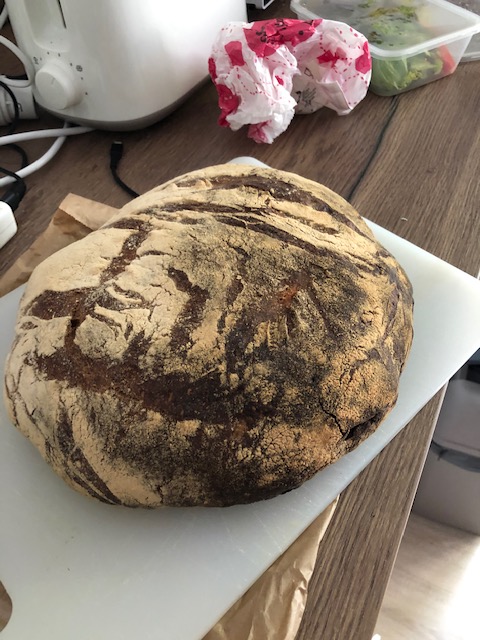
So, what about regional food? Not my favorite. The Perigord is famous for foie gras production, magret de canard, gizzard salad and various things cooked in goose fat. But, it’s also smothered in walnuts and as a result one can sample delicious walnut liqueur, walnut jams and walnut cake. We ate the latter every day without fail. Lastly, there’s the rustic sourdough, baked in a wood-burning stove for a smoky char.

We stuck to our usual pattern when traveling: drive to a couple of hill towns and walk up to the top to admire the views, stop midday for lunch and rest, then resume. We sought out the smaller villages on the Dordogne or Vézère rivers, where we’d linger under willows and raucous birdsong. France has a lot of places like that. I hope we see many more of them.





 kmazz
kmazz 